
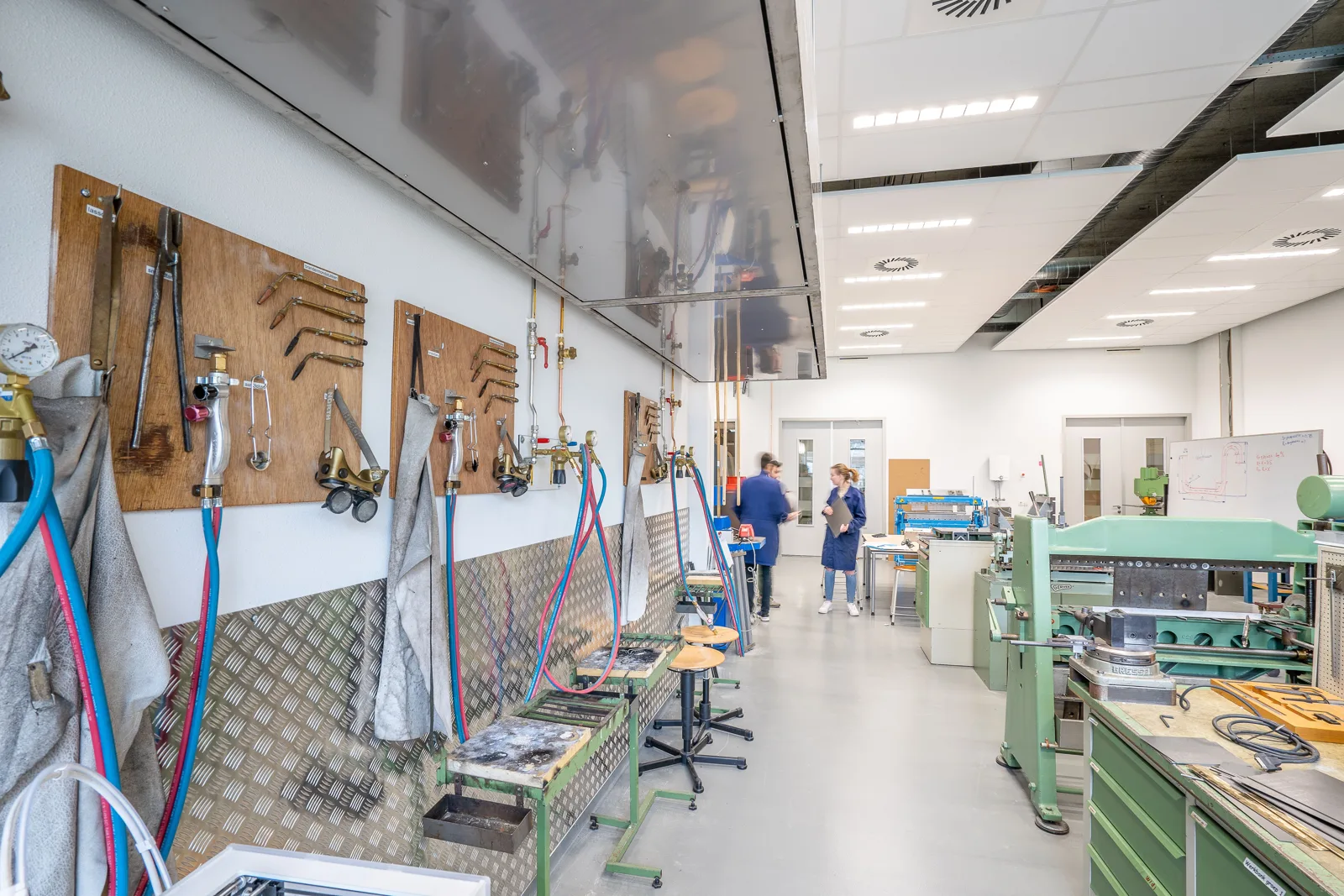
The invoices remain unpaid, but the workshop is still operating. The machinery appears unchanged, the telephone is answered and new orders appear on the website. For a creditor, this continuity can be frustrating: the business is producing, while the company to which it sold claims to lack resources. Before concluding that someone has removed assets, it is necessary to understand who owns what and how that has changed over time.
On 3 November 2026, an investigation by the Guardia di Finanza in Rionero in Vulture concerning two metalworking businesses in the province of Potenza was made public. The provincial command’s statement, reproduced by Agenzia Opinione, reports business disqualification measures against two entrepreneurs and the seizure of assets worth over €1.6 million. According to the investigators’ allegations, a business unit was transferred in 2020 to another company linked to the same individuals, depleting the company that was subsequently declared bankrupt in 2025. These are allegations at the preliminary investigation stage, rather than finally established liabilities. [1]
ANSA and Italpress reported the case on 3 November, confirming the essential elements of the statement. The news date should be distinguished from the disputed corporate transactions, which took place six years earlier; the sources consulted do not specify the day the measures were executed. The case raises a useful question for creditors: can the current asset position really be understood without reconstructing its history? [2][3]
Start with the exact debtor
The first file to organise is the one documenting the debt: contract, orders, invoices, deliveries, disputes and promises of payment. Each document must be connected to the counterparty’s legal name and tax identifier. A shared brand or the same commercial contact can make a relationship involving several businesses appear to be a single one.
A timeline can then be built: when the debt arose, when delays began, which corporate changes are recorded and what explanations were provided. It is also useful to preserve communications announcing a transfer of the business or requesting that orders be addressed to a new entity. They do not establish wrongdoing on their own, but help formulate precise documentary requests.
The Italian Business Register describes the company dossier as a collection of information and documents that includes, depending on the type of business, financial statements, shareholdings and business transfers; the historical dossier adds the history of changes. The Bologna Chamber of Commerce also identifies information sections covering business-unit transfers, mergers, demergers and successions. These are starting points for identifying transactions to investigate, rather than a complete inventory of recoverable assets. [4][5]
A verifiable question for every asset
A photograph of the premises or a catalogue shows what is being used, rather than necessarily what belongs to the debtor. For machinery observed in a workshop, the useful question is whether it is owned, leased, rented or entrusted by a customer. For real estate, the occupier must be distinguished from the registered owner. The simple fact that an asset serves the business does not establish who can dispose of it.
A basic record can include the description, any available identifier, documented owner, user, source and date of verification. When a transfer emerges, seek the deed, the parties involved and the terms that can be documented. If the price or payment cannot be verified, the gap must remain explicit: it should not be filled with an assumption.
Value also requires care. An installation’s historical cost, an advertised price and an estimated realisation value describe different measures. Assessing whether further investigation is worthwhile requires at least a date, a methodology and identification of who produced the estimate; a competent professional should be involved when necessary.
Give counsel organised facts, rather than suspicions alone
Recurring directors, shared premises and family relationships can guide research. They are insufficient to demonstrate that a transfer is fictitious or that another company’s assets are available to satisfy the debt. A reorganisation may have ordinary economic reasons, which should be examined alongside the elements giving rise to concern.
Useful material for counsel distinguishes three levels: what a document establishes, what a source reports and what remains a hypothesis. A table of dates, assets and deeds allows an assessment of which further checks are needed and whether any action should be considered urgently. Asset research informs that assessment; it does not automatically determine which assets can be pursued.
Before investing in a complex recovery, the creditor should be able to read a clear reconstruction: which entity owes payment, which resources are documented, which transfers merit attention and how reliable each item of information is. The absence of findings is also a result to document, identifying the registers and period actually examined.
GRISK can support creditors and law firms in reconstructing assets and corporate transfers, documenting property, connections and changes that inform the assessment of recovery options.
Sources and editorial note
The Guardia di Finanza statement was read in Agenzia Opinione’s reproduction; neither the judicial order nor the original on the force’s website was obtained. ANSA and Italpress converge on the statement and do not constitute independent verification of the transactions. The news dates from 3 November, the disputed transfers from 2020 and the reported bankruptcy from 2025; the exact execution date of the measures is unspecified. The proposed research arrangements are the article’s assessments: whether assets can be pursued and which steps to take are matters for counsel based on the particular case.
- Guardia di Finanza, Potenza Provincial Command, “Interdetti due imprenditori dall’esercizio dell’attività di impresa e sequestrati beni per un valore di oltre 1,6 milioni di euro”, statement reproduced by Agenzia Opinione, 3 November 2026, 13:00; institutional original not obtained.
Statement reproduced by Agenzia Opinione - ANSA, “Nel Potentino interdetti due imprenditori, Gdf sequestra beni per 1,6 milioni”, 3 November 2026, 10:56.
ANSA report - Italpress, “Basilicata, interdetti due imprenditori e sequestrati beni per oltre 1,6 milioni nel Potentino”, 3 November 2026.
Italpress report - Registro Imprese / InfoCamere, “Fascicolo ordinario e storico”, update date not stated; consulted on 4 November 2026. Primary methodological source.
Company dossiers - Bologna Chamber of Commerce, “Visure”, update date not verified; consulted on 4 November 2026. Primary methodological source.
Business register extracts