
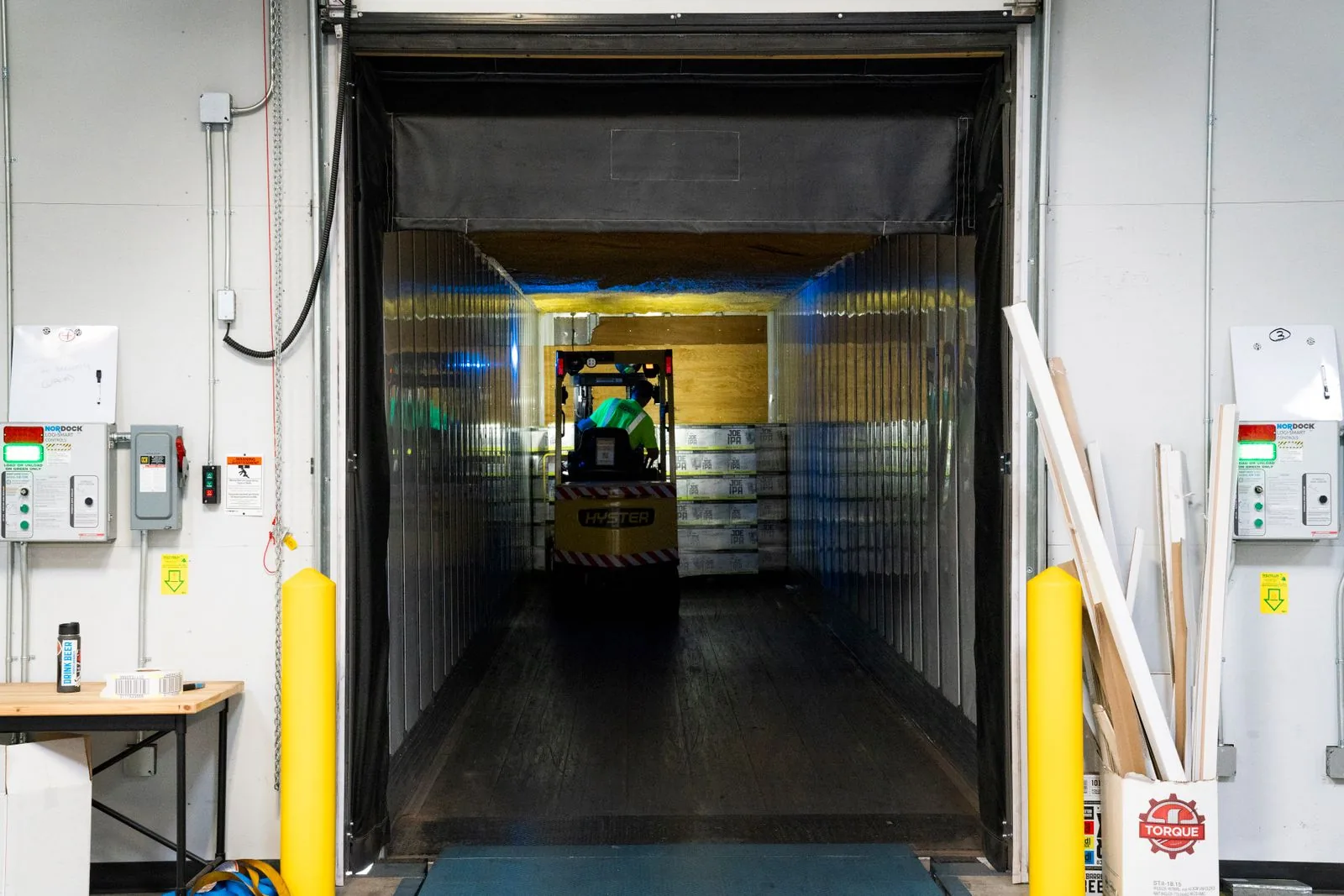
The truck is waiting at the gate. The order number is correct, but the registration number differs from the one given to the warehouse. The freight forwarder says there has been a breakdown and asks the warehouse to load the truck anyway: if it misses its slot, the delivery will fall through. At that moment, staff at the loading bay need to know who authorised the change and which company they are handing the goods over to.
On 6 November 2026, Eurojust issued an update on an investigation by Belgium and Romania into the suspected theft of the contents of around 70 shipments. It reported 65 searches carried out in Romania on 3 November, 11 people apprehended in Romania and five arrested in Belgium. According to investigators, the suspects allegedly used several companies to obtain transport assignments and then take the goods, including by using false documents and registration plates. Radio România reported the Romanian prosecutors’ account on 3 November. The sources describe investigators’ allegations and steps taken during the investigation. [1] [2]
Who took the assignment and who is carrying it out?
An order may start with a familiar freight forwarder and end up with a carrier the warehouse has never seen before. Before collection, it is worth asking for the legal name of the company carrying out the journey and finding out whether the assignment can be passed to a subcontracted carrier. For regular transport, these details can be kept in the supplier record. For a one-off journey or a high-value load, they are worth confirming for the individual shipment.
For businesses listed in Italy’s road hauliers register, the Regolarità Imprese portal allows authorised users to check compliance with social security contribution requirements. That result applies to the business looked up in the portal. A separate confirmation is needed to link it to the truck in the yard: the verified carrier or freight forwarder should be able to match the assigned vehicle and driver to the order. For a new supplier, it is worth obtaining the contact details before loading day so staff do not have to rely on details presented for the first time at the gate. [3]
Handle the change before opening the bay
A replacement vehicle may be needed. To handle the change, logistics staff can send the warehouse the expected collection details, including the registration numbers of the tractor unit and semi-trailer where relevant. If any detail changes, staff at the bay pause loading and refer the check to the designated person within the company. That person contacts the freight forwarder or carrier using verified contact details and asks them to confirm the new vehicle and driver against the order number. The response should be logged in the shipment file with the time and the name of the person who authorised release.
The procedure also needs to work when the usual contact is away. Someone else must be reachable, and staff must already know who can postpone collection. Otherwise, pressure to clear the bay or meet the delivery time can end up deciding the matter for the person responsible for the load.
If the shipment fails to arrive, trace the last confirmed step
For a sensitive shipment, it can help to agree in advance who confirms that the goods have been taken into their care and who alerts the customer to a transfer between vehicles, a change of destination or a significant delay. If the goods do not arrive, the first question is where the confirmed record ends. A departure time logged at the gate, a replacement communicated by telephone and a delivery reported by the carrier come from different sources. Keeping them separate helps identify what information to look for first.
The file should bring together the order, consignment note, collection details, original messages and authorised changes. If there is concrete cause for suspicion, the person handling the incident can use that timeline to promptly notify the relevant people within the company, the insurer in line with the policy terms and, if necessary, the authorities. It is worth preserving relevant access logs and any footage, within applicable limits, before they are erased under normal retention schedules.
GRISK can help verify the companies involved in the transport and reconstruct the chain of assignments from documents when discrepancies emerge or goods fail to arrive.
Sources and editorial note
- Eurojust, “Investigation into large-scale theft of freight shipments containing consumer goods”, 6 November 2026. Official statement on the investigation. https://www.eurojust.europa.eu/news/investigation-large-scale-theft-freight-shipments-containing-consumer-goods
- Andrei Enache, Radio România, “Grupare suspectată că a deturnat zeci de transporturi de marfă în România şi străinătate, destructurată”, 3 November 2026. News coverage of the Romanian prosecutors’ statements. https://www.radioromania.ro/Actualitate/grupare-suspectata-ca-a-deturnat-zeci-de-transporturi-de-marfa-in-romania-si-strainatate-destructurata-id234501.html
- Italian Road Hauliers Register, “Regolarità Imprese”, page updated on 3 November 2026. Official source on the service. https://www.alboautotrasporto.it/web/portale-albo/servizio-regolarita-imprese
- DIICOT Pitești, statement of 3 November 2026, reproduced in full by Ziua de Constanța in the article “DIICOT: FOTO. Peste 60 de percheziții în România într-un dosar de furturi de marfă de 9 milioane de euro. Gruparea ar fi deturnat 70 de transporturi”. https://www.ziuaconstanta.ro/stiri/justitie/diicot-foto-peste-60-de-perchezitii-in-romania-intr-un-dosar-de-furturi-de-marfa-de-9-milioane-de-euro-gruparea-ar-fi-deturnat-70-de-transporturi-959044.html
Eurojust’s statement is dated 6 November 2026. The searches took place on 3 November. Radio România reports the prosecutors’ statements and does not independently establish the individual incidents. The original DIICOT statement was read in its full reproduction by Ziua de Constanța because the prosecutor’s website returned an access error. The guidance on collection, discrepancies and documentation reflects the article’s operational assessments.