
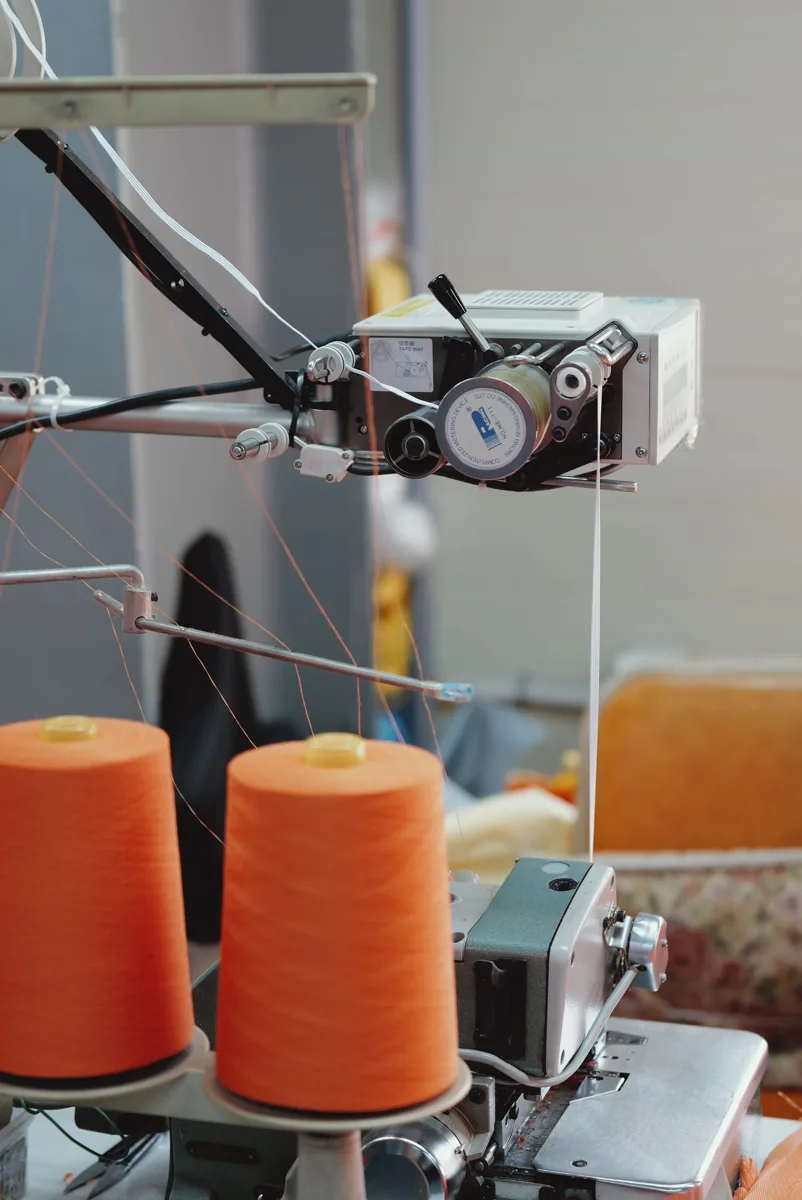
The contact is the same, the workshop has not moved and deliveries continue. Only the company issuing the invoices changes, accompanied by a request: update the supplier record and address future orders to the new business. It may be a perfectly legitimate reorganisation. Before treating it as a formality, however, it is worth understanding what passes to the new company and what remains with the previous one.
On 29 October 2026, an investigation by Italy’s Guardia di Finanza into the textile sector in the lower Venice area was made public. A statement from the provincial command, reproduced by Agenzia Opinione, describes an alleged system of sham contracting through companies without a real business organisation, managed by nominees: they allegedly hired workers, accumulated tax debts and then ceased trading through bankruptcy. The account concerns 57 employees; five people are reported as being under investigation, with seizures exceeding half a million euros. These are preliminary investigations, not findings of responsibility established by a final judgment. [1]
ANSA and La Nuova Venezia reported the case on the same day, corroborating the central elements of the investigators’ account. These reports do not constitute independent verification of the companies’ accounts. The sources consulted do not specify the exact date of the searches: 29 October is the date of the news reports. [2][3]
The history of the relationship matters as much as the supplier record
For buyers of manufacturing work or services, the useful lesson is to check continuity between businesses that successively provide the same supply. A change of company name and a move to an entity with a different tax identifier are situations to distinguish immediately. In the latter case, trust built with a contact does not by itself answer questions about the new counterparty.
The check can start with a basic chronology: companies that issued invoices, operating periods, directors, premises and the stated reasons for the changes. Current and historical company extracts, available filings and commercial correspondence allow the account given to be compared with documented information. Record the source and date of each item: information from two years earlier may describe an arrangement that no longer exists.
Shared contact details, recurring directors or shared premises can guide further enquiries, but do not prove fraud or automatically identify who really controls the business. Seek verifiable explanations and consider ordinary ones too, such as a business transfer or group reorganisation.
Understand who actually performs the work
The second question concerns how work is organised: which company performs the manufacturing work, where and with what resources? It is reasonable to ask the supplier to describe its role and that of any subcontractors, comparing the response with the contract, orders and delivery documents. Where the relationship allows, an agreed visit can help clarify the operating capacity claimed.
There is no need to collect employees’ personal data indiscriminately. The check should focus on the businesses, operational responsibilities and relevant documentation, involving employment-law advisers when doubts arise about workforce management. A visit or company extract alone does not certify that a supply chain is compliant.
Price also deserves a concrete explanation. A quotation far below previous ones may reflect real efficiencies; asking how it is sustainable helps assess the supply. Decisions become harder when, alongside the discount, the invoicing company and contractual terms change repeatedly while nobody clarifies who remains responsible for commitments already made.
Before the next order, clarify outstanding matters
At the point of transition, list outstanding matters: advances paid, goods entrusted for processing, incomplete deliveries, disputes and promised warranties. For each, request a written response identifying which entity will handle it and the documents supporting the transfer. The continued availability of the same contact by telephone does not clarify these relationships.
If explanations are incomplete, purchasing, finance and advisers should share their concerns before authorising new advances or increasing exposure. Continuation can be assessed in stages, with deliveries and payments proportionate to what has been verified, taking existing contractual commitments into account.
The useful outcome is a reasoned decision: which elements support the new business’s reliability, which remain uncertain and who will update them. Keeping this reconstruction prevents every change of company from resetting the memory of the relationship.
GRISK can support the reconstruction of suppliers’ corporate histories and connections, helping businesses assess the available information before continuing the relationship.
Sources and editorial note
The journalistic sources converge on the Guardia di Finanza’s account; they are not independent findings of the alleged facts. The institutional statement was consulted in Agenzia Opinione’s reproduction, rather than on the original Guardia di Finanza website. The date of the individual interventions is not specified. The business guidance represents the article’s operational assessments and does not describe further facts from the case. Sources consulted on 30 October 2026.
- Comando provinciale Guardia di Finanza Venezia, «Frode fiscale e somministrazione illecita di manodopera nel settore tessile – 5 denunciati e sequestri per mezzo milione di euro», nota riprodotta da Agenzia Opinione il 29 ottobre 2026, ore 10:01. Fonte istituzionale consultata tramite riproduzione giornalistica, non sul sito originario. https://www.agenziagiornalisticaopinione.it/opinionmix/gdf-guardia-di-finanza-venezia-frode-fiscale-e-somministrazione-illecita-di-manodopera-nel-settore-tessile-5-denunciati-e-sequestri-per-500-mila-euro/
- ANSA, «Gdf Venezia, aziende fantasma nel tessile e 57 lavoratori senza contributi», 29 ottobre 2026, ore 11:59. https://www.ansa.it/sito/notizie/economia/pmi/2026/10/29/gdf-venezia-aziende-fantasma-nel-tessile-e-57-lavoratori-senza-contributi_5c5923a1-1a90-47fa-aafb-0f6081187b5b.html
- La Nuova Venezia, «Venezia, frode fiscale da oltre 2 milioni nel tessile: cinque denunciati e sequestri per 500mila euro», 29 ottobre 2026. https://www.nuovavenezia.it/cronaca/venezia-frode-fiscale-tessile-appalti-fittizi-cinque-denunciati-w72l0wod